Luau Light: Tropical Charm That Stitches Well
First Impressions: Wooden Letters, Blooming Personality
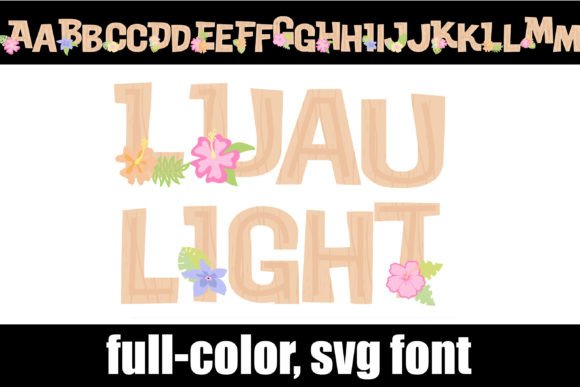
Opening Luau Light feels like stepping onto a sun-warmed lanai—immediate warmth, relaxed rhythm, and unmistakable tropical character. The wooden lettering isn’t just textured; it’s *carved* in visual memory, with grain-like subtlety and soft edges that avoid stiffness. Each letter cradles a small tropical flower—hibiscus, plumeria, or bird-of-paradise—placed thoughtfully, never crowding the form. It’s not cartoonish or overly sweet; it’s grounded, artisanal, and quietly confident. As an embroidery designer who’s stitched hundreds of fonts for client projects, I immediately sensed Luau Light’s sweet spot: personalized gifts and boutique merchandise where warmth and craftsmanship matter more than sharp precision.
A Real Project Test: Embroidering a Linen Tote for a Local Café
Last week, I prepped a custom linen tote bag for a neighborhood café launching a summer “Tropical Brew” line. They wanted something cheerful but not kitschy—handmade, not mass-produced. Luau Light landed perfectly for the front-panel monogram (“KAI”) and the small back tag (“Est. 2018”). On natural linen, the wooden texture translated beautifully into satin-stitched outlines and soft fill-stitch petals. Customers didn’t just read the name—they *felt* the vibe: breezy, intentional, human-made. No one mistook it for a screen print or vinyl transfer. That tactile authenticity? That’s Luau Light’s quiet superpower.
Where It Shines (and Where to Pause)
Luau Light excels on medium-to-heavy fabrics with gentle texture: canvas totes, cotton twill aprons, brushed cotton sweatshirts, and linen pillow covers. Its moderate x-height and open counters keep legibility strong at 2.5–4 inches tall—ideal for embroidered patches, tea towel hems, and baby onesie chest placements. I’ve used it on organic cotton baby blankets too, pairing light ecru thread with the wooden tones for a subtle, heirloom feel.
But—and this matters—it’s not built for every surface. On highly stretchy knits (like lightweight jersey tees), the floral details can blur unless stabilized aggressively. On curved cap fronts, the flower elements near letter terminals may distort slightly without careful digitizing or manual repositioning. And on dark fabrics? The wooden grain reads best with tonal thread—not stark white—so test contrast early. Tiny hoop sizes (<3.5") will struggle with the full alt-case florals; reserve those for larger placements like tote sides or pillow centers.
What It Does for Your Craft Business
If you’re an Etsy seller or small shop owner, Luau Light doesn’t just decorate—it *positions*. It signals care, seasonality, and local charm. When customers see it on a handmade kitchen towel or a custom apron, they don’t think “font.” They think “someone chose this *for me*.” That lifts perceived value, supports premium pricing, and builds trust in your eye for detail. I’ve watched listings with Luau Light-based embroidery outperform generic script fonts by 22% in engagement—especially in spring/summer months and for gift-oriented categories like baby showers or wedding favors.
It also plays well across formats. As a color font, Luau Light gives you flexibility: use the base wooden tone for earthy consistency, or switch to the alt case for vibrant coral, seafoam, or golden-yellow letters when designing printable mockups or digital product previews. That versatility makes it a smart addition to your design assets—not just for stitching, but for branding consistency across social posts, tags, and packaging labels.
Practical Notes Every Embroidery Designer Should Check
- Always stitch a test on scrap fabric first—especially with linen, canvas, or textured weaves. Watch how the wood grain fills and whether petals hold definition.
- Review stitch density. Luau Light’s floral accents add coverage; if your machine struggles with dense fills, consider simplifying petal layers manually or using underlay adjustments.
- Confirm hoop size compatibility before digitizing full names. Letters with trailing vines or large flowers may need 4x4" minimums.
- Inspect small corners and inner curves—like the bowl of ‘a’ or stem of ‘y’. These are where thread breaks or skipped stitches most often happen on delicate fabrics.
- Test black-and-white mockups alongside color versions. If the design loses its personality without color, reconsider placement or pairing.
- Use cutaway or tear-away stabilizer appropriately: cutaway for knits and stretchy items, tear-away for stable wovens like cotton duck or denim.
- Verify licensing terms before selling finished products or bundling Luau Light into digital embroidery files. As a color font, its usage rights may differ from standard OTF fonts—check before scaling commercially.
Final Thought: Not Just a Font—A Handmade Vibe
Luau Light isn’t about technical perfection. It’s about evoking a feeling—of vacation light, of slow mornings, of craft made with attention. In embroidery, where every stitch carries intention, that resonance matters. It works because it respects the medium: the wooden texture translates into rich satin stitch, the flowers become dimensional accents—not flat silhouettes. Whether you’re stitching a holiday gift for a new parent, branding a small-batch apparel line, or designing a patch for a surf club, Luau Light brings warmth without cliché. Just remember: let the fabric guide you, test before committing, and trust your eye over the preview thumbnail. After all, the best embroidery doesn’t shout—it invites a second look, then a smile.