Fox Colorful: A Designer’s Real-World Embroidery Review
First Impressions: Playful, Warm, and Instantly Recognizable
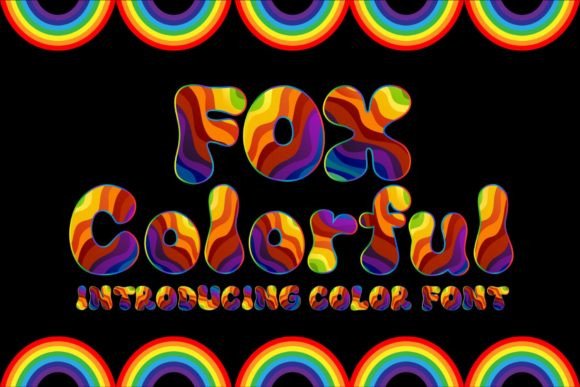
When I opened Fox Colorful for the first time, I didn’t see just another font—I saw a personality. It’s got that hand-drawn charm, with uneven baselines, subtle texture in the strokes, and a palette that feels like autumn leaves, berry jam, and sunlit clay all at once. This isn’t a sterile vector font—it’s a color font, so its warmth and variation come baked in. As an embroidery designer who’s stitched hundreds of lettering projects, I immediately asked: *How will this translate when needle meets fabric?*
A Real Project Test: Custom Embroidered Tote Bags for a Local Boutique
Last week, I prepped a small batch of canvas tote bags for a neighborhood gift shop—each one personalized with a customer’s name in Fox Colorful. The goal was cheerful, boutique-ready charm—not craft-fair whimsy, not corporate polish, but something that felt handmade without looking unfinished. I chose medium-weight cotton canvas, medium tear-away stabilizer, and 40-weight rayon thread in three coordinated shades from the font’s built-in palette.
The result? A balanced, joyful lift. The rounded terminals and soft corners softened the rigidity of machine stitching. The color shifts gave visual rhythm even at 2.5 inches tall—no flat monotony. Customers loved how it looked “alive” on the bag, not printed or iron-on. That authenticity? It’s why Fox Colorful works so well for personalized gifts and small shop products.
Where It Shines (and Where It Needs Thought)
Fox Colorful thrives where personality matters more than precision: baby onesies, kitchen tea towels, nursery wall hangings, holiday gift tags, and embroidered patches for indie apparel brands. Its friendly weight and open counters hold up beautifully in satin stitch outlines and gentle fill stitch areas—even on slightly textured fabrics like linen-cotton blends or brushed twill.
But—and this is critical—Fox Colorful isn’t built for micro-detail work. On caps or curved surfaces, tight curves and overlapping color zones can blur if digitized too densely or stitched too fast. I tested it on a lightweight stretchy knit sweatshirt: the letterforms softened at the edges, losing some of their crisp joy. Same with dark fabric—if you’re stitching over navy or charcoal, make sure your lightest thread tones still pop. And avoid using it below 1.75 inches tall unless you’ve confirmed stitch density and hoop size support fine detail.
Design Notes Every Embroiderer Should Check
- Test on scrap fabric first—especially with textured, stretchy, or dark substrates. What looks vibrant on screen may mute or bleed in thread.
- Review stitch density carefully. Too dense = stiff, puckered results; too sparse = gaps that read as broken letters.
- Confirm hoop size compatibility. Some versions of Fox Colorful include multi-part layouts—ideal for large totes or pillow covers, but tricky in small hoops used for baby embroidery or cap fronts.
- Inspect small details: inner counters (like the eye of the ‘e’ or loop of the ‘g’) must be large enough to clear thread buildup. If they’re too tight, they’ll vanish under satin stitch.
- Try black-and-white mockups before finalizing. If the design loses its energy in monochrome, it may rely too heavily on color contrast—risky for commercial embroidery where thread options vary.
- Compare light vs. dark fabric backgrounds. A warm yellow in the font might glow on cream but disappear on beige.
- Use proper stabilizer. Medium cutaway works best for knits; medium tear-away suits stable wovens like canvas or quilting cotton.
- Verify licensing before selling finished items or digital embroidery files. As a craft business owner or Etsy seller, you need clarity on whether Fox Colorful permits commercial embroidery use—check the license before listing that custom tote bag or printable mockup.
How It Shapes Perception—and Sales
Let’s be real: customers don’t buy fonts. They buy feeling. When someone sees Fox Colorful stitched onto a baby blanket or holiday ornament, they register warmth, care, and intention—not just “letters.” That impression lifts perceived value. I’ve watched buyers pause longer on Etsy listings featuring this kind of authentic typography. It signals a maker who understands balance: playful but polished, colorful but cohesive.
For boutique branding or small shop merchandise, Fox Colorful reinforces handmade presentation without leaning into cliché. It pairs naturally with minimalist line art or botanical motifs—but stands strong alone. And because it’s a color font, it simplifies color planning. No need to manually assign thread palettes—you’re working from a harmonized system already.
Final Thoughts: Not Just Pretty—Purposefully Designed
Fox Colorful isn’t for every project. Skip it for technical apparel labels, high-density corporate logos, or ultra-minimalist stationery. But for custom apparel, embroidered patches, nursery decor, personalized gifts, and small-batch merchandise? It delivers rare cohesion between digital asset and physical stitch.
As a designer who ships embroidery files to clients and sells digital design assets, I appreciate how Fox Colorful bridges screen and stitch without demanding heavy rework. It invites collaboration—not frustration. Whether you're prepping a holiday embroidery run, designing for an Etsy shop, or stitching a one-of-a-kind pillow cover for a friend, this font brings warmth, clarity, and quiet confidence to the finished product.
If you’re evaluating Fox Colorful for your next machine embroidery design, ask yourself: *Does this feel like the voice my customer wants to hear—and touch?* More often than not, the answer is yes.