Pastel Halloween Clipart: A Designer’s Real-World Embroidery Review
First Impressions: Soft Spookiness, Not Scary—And That’s the Point
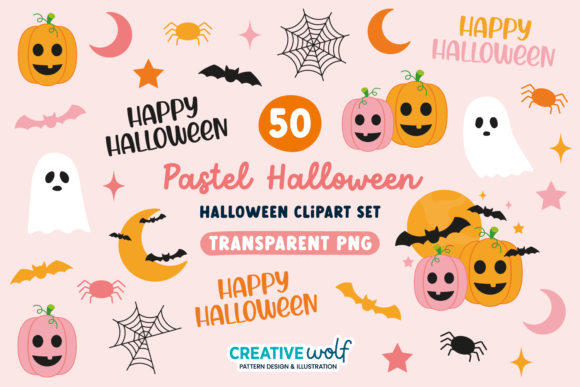
Opening Pastel Halloween Clipart, I immediately felt its intention: gentle whimsy over gothic grit. These 50 illustrations—pumpkins with blush cheeks, ghosts with rounded hems, bats with soft wings, and delicate spiderwebs dotted with tiny stars—aren’t meant for haunted houses. They’re made for baby onesies, linen tea towels, nursery wall hangings, and boutique sweatshirts where “Halloween” meets “handmade charm.” As a designer who’s stitched hundreds of seasonal projects, I appreciate how clearly this set commits to its mood: dreamy, approachable, and quietly festive.
Real Project Test: Embroidering a Linen Tote Bag for a Local Gift Shop
Last week, I used three elements from Pastel Halloween Clipart—a crescent moon, a dainty bat, and a small pumpkin—to embroider a natural linen tote for a local gift shop’s October launch. The result? A product that stood out on the shelf—not because it shouted “Halloween,” but because it whispered “thoughtfully made.” Customers paused. Moms asked about fabric care. Boutique buyers noted how well the designs scaled down without losing shape. That’s the quiet strength of this collection: it supports storytelling, not just seasonality.
Where It Shines in Embroidery Work
- Custom apparel: Works beautifully on lightweight cotton tees and brushed fleece sweatshirts—especially when placed on chest or sleeve where soft curves soften stitch lines.
- Baby embroidery: The simplified shapes and open negative space mean fewer dense fill stitches, reducing stiffness on onesies and burp cloths.
- Embroidered patch: Several motifs (like the star-and-sparkle combo or single ghost) translate cleanly into sew-on patches—ideal for denim jackets or backpacks.
- Tote bag design & kitchen towel embroidery: Linen and medium-weight cotton hold these graphics crisply; the pastel-inspired outlines give breathing room between elements.
- Holiday embroidery for nurseries & gifting: Parents love subtle Halloween touches that won’t overwhelm a neutral nursery palette—and this set delivers exactly that.
Where to Use It Thoughtfully
Not every surface or stitch method suits Pastel Halloween Clipart. Its charm lives in simplicity—but that means certain constraints matter more than usual:
- Small hoop sizes (under 4"): Some spiderwebs and layered moons may need slight simplification—check corner details before scaling down.
- Textured fabrics (like terry cloth or bouclé): Fine linework (e.g., thin spider legs or sparkle dots) can blur; consider using running stitch outlines instead of satin stitch for definition.
- Stretchy fabric (knits, jersey): Stabilizer choice is non-negotiable—use cutaway + topping for clean ghost edges and smooth pumpkin curves.
- Dark fabric backgrounds: Pastel outlines rely on contrast—test thread colors carefully. A light gray or heathered lavender often reads clearer than pure white on navy or charcoal.
- Curved surfaces (caps, beanies): Avoid placing intricate elements like clustered stars directly over seams or crowns—opt for singular, centered motifs instead.
How It Shapes Your Finished Product—and Your Customer’s Experience
When you choose Pastel Halloween Clipart, you’re not just picking graphics—you’re choosing a tone for your handmade product. It elevates perceived value by signaling intentionality: this isn’t mass-produced Halloween clipart slapped on a shirt. It’s curated, cohesive, and commercially smart for Etsy sellers and small shop owners who want seasonal inventory that feels personal, not predictable.
Customers respond to that nuance. A customer once told me her daughter wore a custom-embroidered apron with one of these pumpkins “every time she baked cookies”—not because it was flashy, but because it felt *hers*. That kind of emotional resonance is rare in holiday embroidery. And for craft businesses building brand consistency across seasons, this set fits seamlessly alongside spring florals or winter constellations—same visual language, different occasion.
Practical Notes Every Embroidery Designer Should Check Before Stitching
- Test the design on scrap fabric first—especially if using textured or dark material.
- Review stitch density: lighter fill areas help maintain drape on baby items and lightweight apparel.
- Confirm hoop size compatibility—some motifs may require repositioning for standard 4x4 or 5x7 hoops.
- Inspect small details (like individual sparkles or web strands) at actual stitch size—what looks crisp on screen may vanish in thread.
- Try black-and-white mockups: if the design holds visual weight without color, it’ll translate well across thread palettes.
- Compare performance on light vs. dark fabric backgrounds—adjust underlay or topping as needed.
- Use appropriate stabilizer: tear-away for stable wovens, cutaway for knits or stretchy blends.
- Verify licensing terms before selling finished products or digital embroidery files—this set is categorized as Illustrations and Graphics, so commercial use permissions must be confirmed directly with the creator.
Final Thought: A Quietly Versatile Asset for Thoughtful Makers
Pastel Halloween Clipart won’t dominate a trade show booth with boldness—but it will earn repeat orders from customers who value subtlety, cohesion, and craftsmanship. It’s the kind of design asset that makes your holiday embroidery feel intentional, not incidental. Whether you’re prepping for an Etsy Halloween drop, stitching personalized gifts for friends, or building a small shop’s seasonal line, this set gives you flexibility without sacrificing personality. Just remember: its softness is its strength—so let it breathe, stitch it with care, and trust that sometimes, the gentlest designs leave the strongest impression.